Food value comes from soil
A plant can only pass on what the soil gives it. Tired soil grows tired food — smaller heads of spinach, pale tomatoes, weaker crops.
Grower's guide
Soil is the one thing in your yard that decides everything else — how much you harvest, how much water you use, how much you have to buy in. The good news is that you can rebuild it with what you already have: kitchen waste, dry grass, manure and a little patience. No applications, no suppliers, no permission needed.
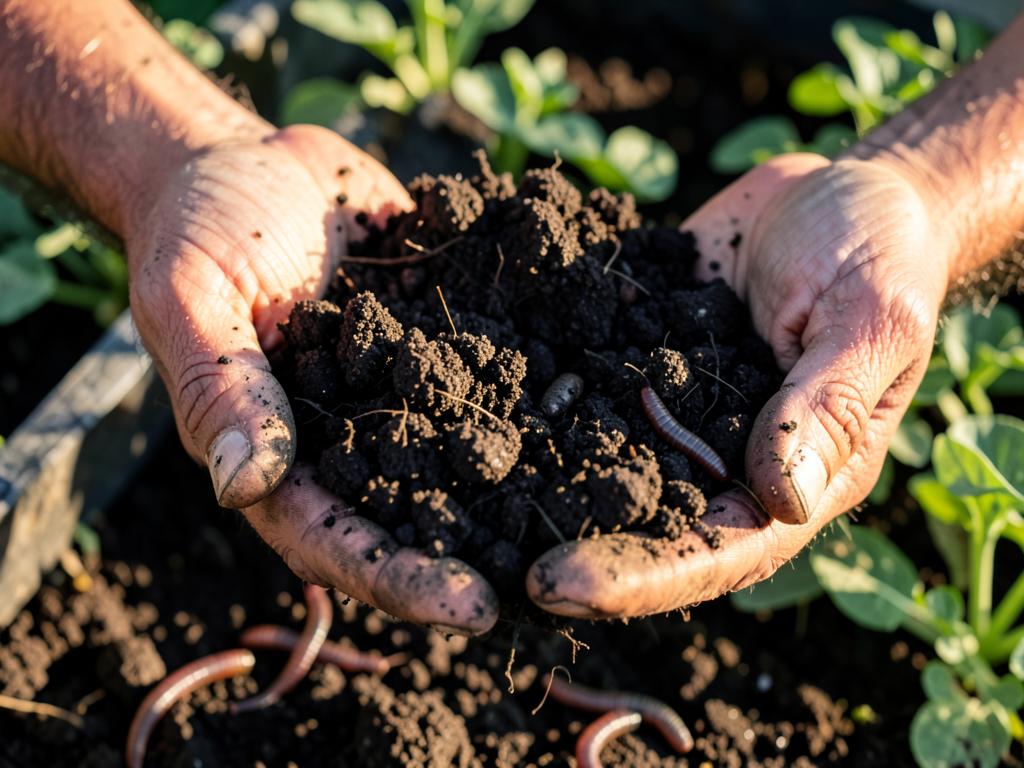
A plant can only pass on what the soil gives it. Tired soil grows tired food — smaller heads of spinach, pale tomatoes, weaker crops.
Soil rich in organic matter acts like a sponge. It stores rain, survives dry spells and cuts how often you have to water.
Worms, fungi and microbes recycle nutrients and keep disease in check, so you depend far less on bought sprays and fertiliser.
Bare, compacted ground crusts over and runs off in a storm. Covered, crumbly soil stays where you put it, season after season.
Soil health hub
Every guide is a short, step-by-step checklist you can work through in your own yard this week. Search for what you need — compost, mulch, cover crops, erosion — or browse by category.
Compost
Turn peels, leaves and grass cuttings into free fertiliser in about three months.
Open checklistMulch
A blanket of dry material cuts your watering, kills weeds and keeps the soil alive.
Open checklistCover crops
Plant legumes and mustard between seasons to pull in nitrogen and break pest cycles.
Open checklistErosion prevention
Slow the water down on slopes and hold your topsoil in the yard where it belongs.
Open checklistSoil structure
Start a productive bed on top of hard ground without breaking your back or the soil.
Open checklistSoil testing
Four quick tests with a jar, a spade and a spoon of vinegar — no laboratory.
Open checklistFeeding soil
Powerful, free and easy to overdo — how much, how rotted and when.
Open checklistCrop rotation
A simple four-bed cycle that breaks pests and evens out how the soil is fed.
Open checklistWork through these in order. Each one costs nothing but time and what your household already produces.
You do not need a laboratory to know your soil. A jar, a spade and a spoon of vinegar will tell you most of what you need before you plant.
Fill a clear jar one-third with soil, top up with water, shake hard and let it settle overnight. Sand settles first at the bottom, then silt, then clay on top. Mostly sand means it drains fast and needs organic matter; mostly clay means it holds water and needs opening up with compost.
Take a damp handful and squeeze. Good soil forms a loose ball that crumbles when you poke it. If it smears like putty it is compacted clay; if it falls apart instantly it is too sandy and hungry for compost.
Dig a spade-sized block of moist soil and count the earthworms. Ten or more is a good sign. One or two means the soil is starved of organic matter and needs mulch and compost.
Put a spoon of soil in two cups. Add vinegar to one: fizzing means alkaline (high lime). Wet the other and add bicarbonate of soda: fizzing means acidic. No reaction in either is roughly neutral, which suits most vegetables.
Pick the bed closest to your kitchen door. Cover it, compost it, plant it, and compare it to the rest of your yard in three months. Then link up with other independent growers nearby to swap compost, seed and what you have learned.